
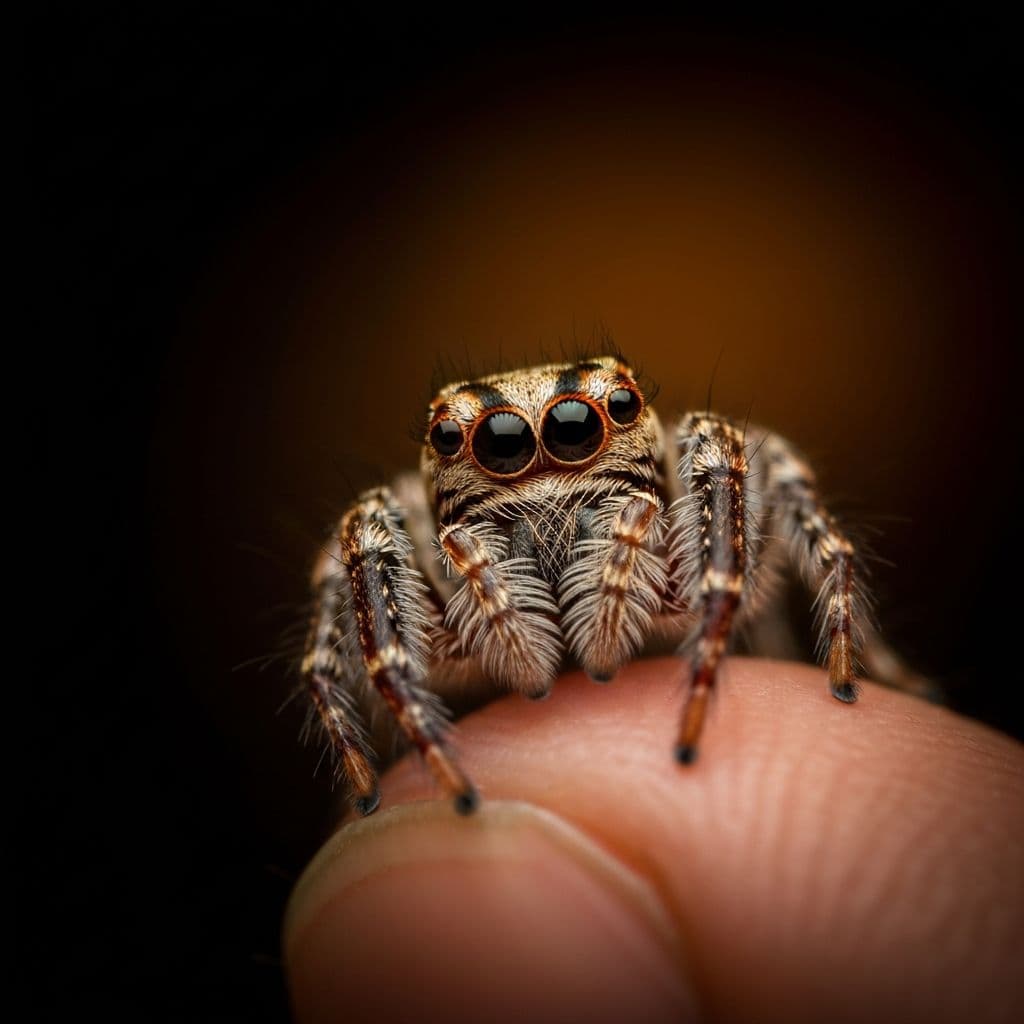
To Handle or Not to Handle?
First, let's address an important point: jumping spiders don't need handling to be healthy or happy. However, many keepers (including us!) enjoy interacting with their spoods.
The key is to let your spider set the pace.
Understanding Spider Body Language
Before attempting to handle, learn to read your spider:
Relaxed spider:
- Slow, deliberate movements
- Front legs held forward curiously
- May "track" your movements with their eyes
Stressed spider:
- Fast, erratic movements
- Legs tucked close to body
- Jumping away repeatedly
- Threat posture (front legs raised)
Important: Never force handling on a stressed spider. It's not worth the risk of injury to you or your spider.
The Gentle Approach
1. Start with enclosure time - Let your spider get used to seeing your hand near their home
2. Offer your hand as a bridge - Place your hand flat in the enclosure and wait
3. Let them come to you - Curious spiders will often explore on their own
4. Keep sessions short - 5-10 minutes maximum
Safety First
When handling:
- Stay close to a soft surface (bed, carpet)
- Move slowly and predictably
- Cup your other hand below as a safety net
- Avoid sudden movements or loud noises
Building Long-term Trust
With patience, many jumping spiders become quite comfortable with their keepers. Some will even:
- Jump to your hand voluntarily
- Allow gentle "petting" on the abdomen
- Recognize you and show curiosity when you approach
Remember: every spider has their own personality. Some love interaction, others prefer to observe from a distance. Both are perfectly normal!